
Unveil European Craftsmanship & Style






Our clients are our top priority, and each project tells a unique story, deserving a personalized touch. We aim to become that dedicated companion who’s always by your side. Our team will handle every detail for you, from crafting your customized design to seamless installation.



Our achievements speak volumes. We have already established ourselves as a premier specialist in planning, projecting, and supplying doors and windows for Canadians. Eager to uncover the secrets behind our success? Feel free to connect with us or step into our captivating showroom at 6210 Northwest Dr, Mississauga, located in the vibrant heart of Toronto GTA.


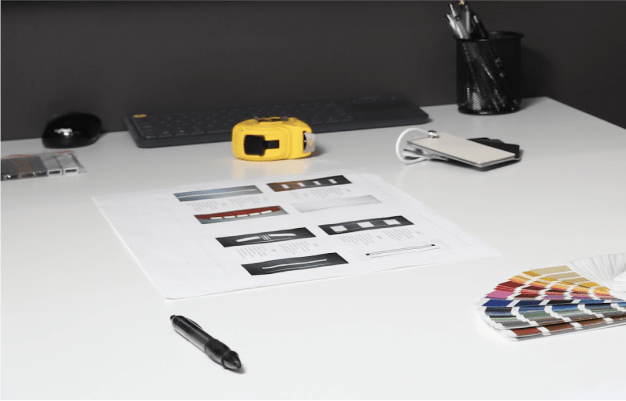
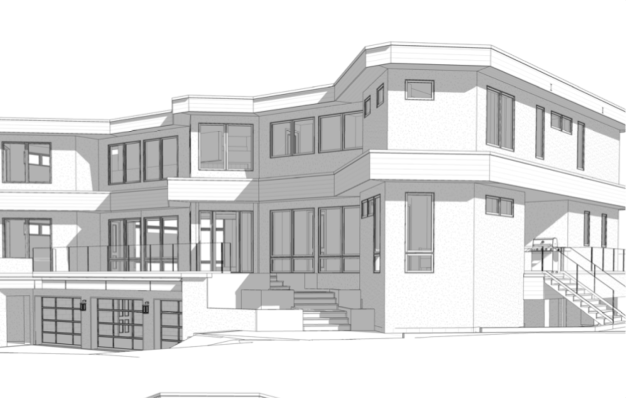


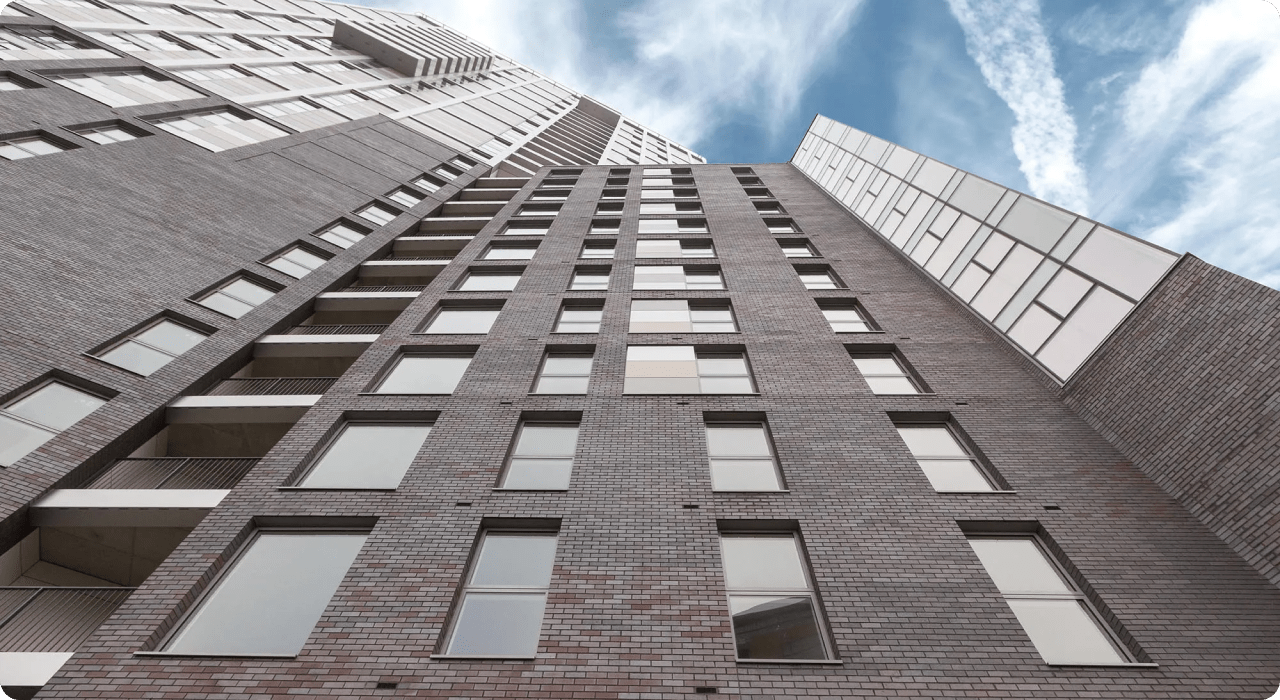

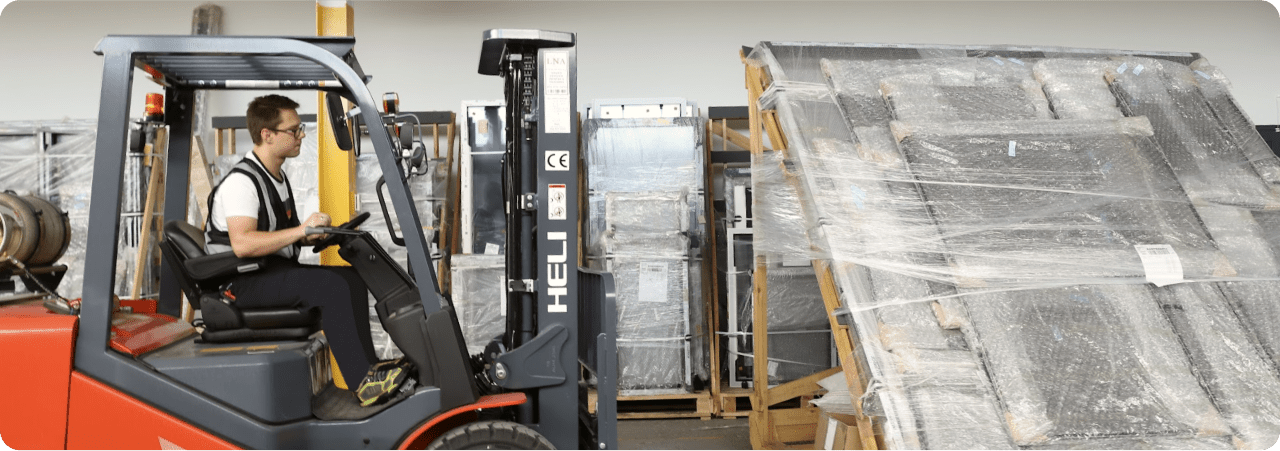

Qualifying
Estimating
Project Management
Drafting Illustrations
Order Production
Installation Support
Service


FREQUENTLYASKED QUESTIONS
Safety glass – toughened and laminated
The type of glazing used can significantly increase the safety of the household members. Laminated and toughened glass are more resistant to puncture or breakage. Therefore, they effectively reduce the risk of burglary or theft. Moreover, they are “safe” panes also in another aspect. In the event of breaking the laminated pane, the glass shatters remain attached to the special foil that covers the pane. This reduces the risk of injury to those around you. In turn, the toughened glass breaks into small particles with blunt edges, which minimizes the risk of injury.Handles – anti-burglary with a lock and a key
A small element that can have a big impact on safety is the handle. There are handles available on the market that block the access of uninvited guests from the outside, but also protect against opening windows or balcony doors from the inside. The Hoppe Secustic anti-burglary handle with a key has a self-securing mechanism that blocks its rotation. If you try to get into an apartment or house and push the fitting with a tool, the window movement is blocked. The ability to turn the key from the inside and close the window, balcony or terrace doors allows to ensure the safety of the youngest family members.Window profiles and fittings
Safe windows are equipped with appropriate profiles. To be able to give them anti-burglary status, they must have a closed steel reinforcement throughout their perimeter and be permanently screwed to the profiles with screws. If windows and balcony doors are to constitute a solid barrier for burglars, it is worth supplementing the fittings with additional elements. Examples include anti-burglary catches, anti-burglary pivots with adjustable pressure or a lock for incorrect handle position. The construction of profiles, fittings, glass, and handles are the basic elements that affect the safety of the window joinery. If we want even better protection of real estate, property, and household members, let’s opt for an alarm system and special anti-burglary roller blinds.The basic function of the bathroom window is the possibility of not only fully opening the sash, but also tilting it. This will allow to maintain adequate air circulation and get rid of excess moisture in the room. It is also worth making sure that the tilt-and-turn systems chosen by us make it possible to unseal the window. Micro-ventilation is useful at low outside temperatures, when it is simply too cold to tilt the window. In cold periods, diffusers will also work, thanks to which we can exchange the air without unnecessary cooling of the room.
Thermal comfort in the bathroom is extremely important.
When choosing a bathroom window, it is worth considering the material of the window frame. Due to the humidity, it is best to choose PVC or aluminum profiles. Keeping wooden windows in good condition can be quite a challenge in the case of a bathroom.
Skygen Windows Systems offers aluminum and PVC systems in many colors to choose from. In traditional arrangements, they will look as good as wooden profiles.
Security and privacy are very important when choosing bathroom windows. Especially if the bathroom is on the ground floor, we can think about anti-burglary solutions, special fittings or roller shutters. The latter will also provide us with privacy in the evening when we turn on the light, and at any time when we need intimacy.
If we install a bathroom window to illuminate the room and take care of natural ventilation, and we do not necessarily care about the total translucency of the glass, we can opt for decorative glass. The choice is huge – matte or ornamented pane, apart from its practical aspect, will be a decorative accent in the room.
The walls in new buildings feature two or three layers with inner thermal insulation. Correct and effective installation, sealing and insulation of windows prevent accumulation of condensation within the thermal insulation layers of a wall. This protects the wall structure from getting wet and attacked by mould, while the installation, if done according to design specifications, prevents indoor heat losses and cold bridges.
Sealed and insulated installation of windows is viable in two and three-layer walls which have been thermally retrofitted. It is not possible in walls made from a single, solid layer. This is so, because windows extend the wall’s thermal insulation if installed directly within it.
A sealed and insulated installation of windows essentially involves building three layers. The outer layer is vapour-breathing which helps remove moisture from the indoor environment. It also prevents ingress of water vapour to the indoors. It is made with water-vapour tapes or film. The central layer is made of polyurethane foam or mineral wool. For the inner layer (which is facing indoors), vapour-breathing film is installed which prevents ingress of moisture from the building interior into the caulking foam; it is critical in that a wet caulk loses its thermal insulating performance. Note that caulking foam products provide thermal insulation and a sound-proofing barrier. Sealed and insulated installation is especially recommended for low-energy windows.
The window opening should be slightly larger than the window frame outlineto provide a correct expansion joint. The window opening must be finished neatly and true to provide straight and smooth edges.
1. The window opening inner surfaces must be primed before setting the window within them.
2. Apply the vapour-breathing tape to both sides of the window frame.
3. Use dowel bars and anchors to fasten the window within the window opening (true to the vertical and the level).
4. Apply the outer tape to the building wall.
5. Completely fill the gap between the frame and the wall with caulking foam.
6. Apply the vapour-breathing tape to the internal side of the wall.
7. The last step is to finish-trim the window opening.
Only a correctly sealed and insulated installation of windows will provide the correct thermal insulation performance and energy savings from the use of a building.
Solar control glass is not necessarily coloured or mirrored glass, although such finishes can be applied for aesthetic purposes if desired. It incorporates invisible layers of special materials on the glass which have the dual effect of allowing sunlight in, while repelling solar heat. Solar control glass units are typically double glazed, which means they also insulate well.
Solar control is a key issue in terms of energy saving:
In hot conditions, or for buildings with high internal loads, it is used to minimise solar heat gain by rejecting solar radiation and help control glare
In more temperate conditions it can be used to balance solar control with high levels of natural light.
The handle is the most popular way to open the door. The appearance of handrails made the handle to be a classic. Handrails, on the other hand, associated with modern office buildings, are increasingly appearing as an addition to external doors in private homes. What are the advantages of both solutions and when to choose them?
The first criterion is the style of the building for which the entrance door is chosen. A classic house or building design should be supplemented with a classic door, and thus a classic door handle. Even if its form is minimalistic or modern, it will certainly be better suited to houses in a country, Mediterranean or English style.
On the other hand, in the designs of houses and buildings in a modern, minimalist, Scandinavian or eclectic style and buildings with a futuristic design – museums, galleries, opera houses and office buildings, aluminum doors with simple or rich design handrails are perfect.
The style of the door itself should also influence the choice of a door handle or a handrail. The heavier the door and the larger the sash area, the more the choice of a handrail is recommended. Therefore, it is worth using it wherever it is decided to use aluminum or PVC doors.
The handrail can take the shape of a wave, arch or straight line, as well as have a rectangular or round cross-section, and can also vary in length, which allows it to perfectly match the style of the building and door. Choosing a handrail for an external door is a good idea for those who are constantly afraid that they left the house opened. To close the door with a handrail, just pull it after you go out. Self-closing requires a key to reopen it. This is a great help for forgetful and busy people. The inability to leave the door open, even for a moment, makes such protection a real obstacle for potential burglars.
However, it is worth paying attention to the fact that what will be an advantage for some people may be a disadvantage for others. A gust of wind, a quick exit with garbage, or a return home with large shopping can make it difficult or even impossible to get inside if the key is not within reach or, worse, left at home. In the case of a handle, the problem of locking the keys inside or opening the door with full hands does not actually occur.
Therefore, if you want to use a handrail in external doors, an electric strike is also often installed, which allows the door to be partially locked and opened by pushing. However, this may involve some risk. Therefore, it will also be a good idea to install a fingerprint reader, which will successfully replace the key and make accidentally slamming the door no problem.
At Skygen Windows Systems, we offer both classic PVC and aluminum doors with handles, as well as collections with handrails.
Sliding or folding? This dilemma is mainly connoted with choosing doors to the rooms inside the buildings, wardrobe or fitted wardrobe. It occurs that these systems are good not only for interior solutions but also for balcony doors, terraces or entrance to the garden. This latest trend in architecture gains more and more followers.
Traditional balcony windows are more and more often replaced by huge, glazed structures that consist of many sashes. They are chosen by owners of small areas – small apartments and houses, as well as investors of office spaces or public buildings. Sliding and folding doors are perfect for this type of investment.Sliding doors
Sliding doors are an interesting alternative to the typical double-sash balcony doors. The use of a special hardware mechanism allows the sash to be moved. After turning the handle, it gently slides out perpendicular to the window space, and then moves to the side.As the sash does not open into the room, it does not take up space, as is the case with traditional doors. Thanks to this, the space can be freely developed and functionally planned – without leaving any empty space. This is especially important in the case of small apartments with balconies or terraces. There, every centimeter of the living room or bedroom is valuable. Thanks to the sliding systems, the space can be used to the maximum – put an additional bookcase, move the table closer to the windows, buy a larger sofa – without fear that the furniture will collide with the door being opened.
Doors and sliding windows will also work well in small houses where rooms have several functions. Often, the entrance to the terrace or to the garden is designed from a living room with a kitchenette. The sliding system allows to plan a dining area overlooking the garden and place a table with chairs. If we choose windows of this type, we will gain space, for example, for an additional tabletop or a cabinet with a sink, which can be used freely even with the sash open.
Folding doors
Folding doors are another, interesting and practical way to combine an interior with a garden, terrace or balcony. They consist of two parts: a tilt-turn (or only turn) sash and folding sashes. The use of fittings with rollers in the lower and upper part allows for the creation of long and heavy structures. At the same time, folding doors are very easy to use – they slide slightly and smoothly. With their use, we can create impressive glazing that will illuminate the arrangement and optically enlarge the room. After sliding, folding doors give an extraordinary effect – the border between the interior and the garden is leveled. The space of the living room or dining room extends beyond the house or apartment, so we have the impression of even greater and closer contact with nature.At Skygen Windows Systems, we offer PVC or aluminum sliding systems in a wide range of colors. Our specialists will help you choose a solution tailored to the requirements of the project – both in terms of design and aesthetics.
Too high tightness, however, may cause water vapor on windows as well as in interiors.
There are several ways to get rid of the water vapor from rooms.
Of course, a lot depends on the ventilation system used in the building. A lot depends also on windows. Usually, to maintain the possibility of free air exchange, the ventilators are used. Valued may also occur micro-ventilation in windows. It allows to air exchange even without opening the window.Where does the water vapor in rooms come from?
Occurrence of the water vapor is a natural phenomenon that occurs especially in too tight rooms. Water vapor is formed even doing normal household activities, in particular during cooking or bathing. Too much moisture may lead to the formation of a fungus in the building. This, in turn, is dangerous to health.Regular rooms ventilation becomes necessary.
However, when the cold outside we not always want to wide open the window. The intermediate solution is – already mentioned – micro-ventilation in windows. It is used in traditional windows as well as in balcony or terrace doors. Micro-ventilation is simply the unsealing which is based on creating a gap between the sash and the frame. The gap may have a width of 3 to 6 mm. Unsealing of this type can be made on tilt and turn windows.Unsealing takes place only when the right position of the handle is set – usually it should be turned in 45 degrees.
Thanks to the micro-ventilation in windows the user gains not only constant access to the fresh air, but also confidence that the window won’t open even during strong wind. When the window is tilt or open, the window would be immediately closed because of the draught.Aluminium properties – its lightness, rigidity and resistance to corrosion, high and low temperatures, as well as high insulation parameter and a larger glazing area make them perfect to create large forms.
It’s a perfect material for the construction of window and door systems that enables the construction of display windows, single- or double-sash casement windows, tilt and turn windows, windows opened inwards, as also the Monoblock type windows. Aluminium windows, that can imitate steel joinery, are also recommended to heritage buildings renovation.PVC windows are recommended to the traditional construction. PVC windows not only constantly improve their quality, but also remains the cheapest solution on the market..
PVC windows are characterized with high technical parameters and very good thermal properties, moisture resistance, as also the maintenance easiness.
Aluminium windows thanks to the RAL and DECORAL colour palette, as well as PVC windows thanks to the veneer and the acrylcolor technology, can have any colour – snowy white, fashionable anthracite or a structure e.g. wood. Therefore, when faced with a choice the decisive factor should be the design and the style of a house, not the window aesthetic. PVC windows with the Aluskin aluminium cover may also be an interesting proposition. This is the combination of PVC window functionality with the design of the aluminium window. You will obtain outstanding appearance, as also resistance to external factors, high thermal and acoustic insulation parameters, as also easiness of maintenance. Aluskin covers are also an effective protection of the window frame against mechanical damages and deformation. Assembly and disassembly of the cover is extremely easy, which allows to change its colour many times. And there is a lot to choose from! The multicolour RAL palette or structural varnishes are unlimited possibilities.At Skygen Windows Systems, there is possibility to mount Aluskin aluminium covers on selected systems.
Choice of a window depends on many factors, mostly on subjective preferences, that’s why when you don’t know which windows to choose, contact us and ask for help from our specialists who will be happy to answer all your questions and help you make your choice.
Each of the garage door panel is filled with insulating material and the garage hole is finished with the gasket. Thanks to this structure, sectional garage doors fully protect the thermal insulation when the door is closed.
Opening and closing of the sectional garage door is possible thanks to the drive. In practice, one of two possibilities is used – electric or manual drive. In case of fault or lack of power supply, there is always possible to open the gate in emergency.
In order to ensure smooth and failure-free operation of opening and closing the sectional garage door system, its weight is balanced by properly selected springs, depending on the construction, torsion or tension springs.
Torsion springs
Torsion springs operate on torsional forces which drive a shaft with a coiling drum on which a wire rope is wound attached to the bottom of the door sash. Thanks to them, even the largest gate can be operated manually without much effort. Each of the springs is secured with a blocking mechanism, in the event of a spring break, the door will not fall limply, but will stop. In sectional door systems, torsion springs are usually fitted parallel to the upper edge of the garage entrance opening.
Tension springs Mainly tensile forces influence on these springs along the longitudinal axis. When the garage door is closed, it stretches the springs using a system of steel ropes, which balances the weight of the gate. In sectional door systems, the tension springs are placed in the guides along the side edges of the door sash.
Which sectional doors, with tension or torsion springs to choose?
The average user will not recognize whether torsion or tension springs are used in the sectional door system. Torsion spring systems allow you to make almost any size of the door, but due to their size and location, it is much more difficult to hide them from the eyes of users. The tension spring system is used for small-size gates, they are easier to install and are invisible thanks to covers mounted in vertical guides.
What are the benefits of using triple-glazed windows?
Triple glazed windows are primarily a great energy saving, which is why they are installed in passive and energy-saving houses, but also where this aspect is important for the investor. Characteristically for triple-glazed windows, the heat transfer coefficient is high not only for the glass, but also for the window frame. As standard, the space between the panes is filled with argon and the edges are thermally sealed.At Skygen Windows Systems we also propose to fill the window with krypton, a noble gas, which further improves the insulation of the glass partition. So, we have a guarantee of better thermal insulation, and thanks to three panes also acoustic. And although double-glazed windows still work well in traditional construction, when deciding which version of the window to choose, it is worth considering the longer perspective in which the triple-glazed windows will reduce heating and cooling costs, prevent glass evaporation, which will definitely improve the comfort of life.
Windows can also be aesthetically tailored to the customer’s taste and supplemented with several additions, including warm spacer bars, in one of six restrained colours.
Made of high-quality organic materials, reinforced with glass fiber and thermally optimized, they guarantee the hermeticity of gases filling the space between panes, eliminate thermal bridges from the glass, seal it, and reduce the heat transfer coefficient of the entire window. The use of a warm spacer allows you to save up to 5 percent. property heating costs.When choosing a triple glazed window may not be beneficial? When replacing windows in older buildings or where the thermal insulation is poor or where cheaper heating options such as gas heating, pea coal or coal are used. In this case, the installation of three-pane windows may simply not pay off, so you should opt for double-glazed windows.
Choosing the right window is not the easiest decision and depends on many factors.
And although energy-saving solutions play a large role in an increasing number of buildings, one should not forget about personal preferences and the nature of the investment. If you are wondering what windows to choose, please contact us and ask our specialists for help. They will answer your questions and help you make the best choice.It is the junction of the window structure with the walls of the opening that is the bottleneck of any building in terms of protection against heat loss and moisture accumulation. Thus, complaints regarding the installation seam account for the vast majority of calls and claims regarding the quality of the installation. Errors in the process of sealing the seam lead to the appearance of cold bridges and an increase in heat loss. And in turn, due attention to this particular stage of work contributes to the growth of the tightness of the window structure as a whole, its durability and reliability.
Actually, for maximum protection of the mounting seam, you need to use warm mounting (they are also euromounting).
Warm installation of plastic windows provides for special procedures at the stage of sealing the installation seam. In addition to traditional foaming, additional insulating materials are also used. On the one hand, they provide additional protection to the mounting foam, which, under the influence of temperature fluctuations, moisture and ultraviolet radiation, loses its original properties over time. On the other hand, three layers of insulation at once increase the tightness of the seam as a whole.What insulation layers are used:
outer layer: it protects against temperature extremes, atmospheric influences, ultraviolet radiation, removes excess moisture to the outside;middle layer (actually it is mounting foam). She is responsible for the sound and heat insulation of the window structure;
the inner layer. Its task is to protect the seam from steam and excess moisture. Note that both modern PVC profile and multi-chamber double-glazed windows give high insulating properties. But to enhance the effect, it is necessary to supplement the plastic windows with warm installation.
In terms of implementation, such installation includes all the traditional steps, including placement and alignment in the opening, fastening and foaming. But after that, specialized work is carried out aimed at sealing the assembly seam – that is, all surfaces at the junction of the window structure and the opening (wall). The mounting foam itself acts as a middle insulating layer. It closes all the voids between the frame and the opening.
As the outer layer, a vapor- and waterproof tape or PSUL-tape is used. These insulating materials protect against precipitation, ultraviolet radiation, but at the same time allow the steam that has appeared inside to go outside. The tapes protect the mounting foam and help it retain its properties for a long time.
The inner layer of insulation provides for the use of silicone or insulation. They do not allow steam and moisture to come into contact with the foam.
Optionally, you can increase the level of protection and the lower joint – the place where the window frame is in contact with the window sill area. For these purposes, instead of the traditional stand profile, a warm one is used. It is made from ultra-dense extruded polystyrene foam. Its main task is to protect against the appearance of drafts and freezing in the area of \u200b\u200bthe window sill zone. Unlike conventional base profiles, the warm one minimizes heat loss. At the same time, it is very durable and lightweight, which eliminates the difficulties with transportation and installation.Advantages of warm window installation:
comfortable microclimate in the room;reducing the risk of condensation;
frost protection of walls;
reducing heating costs.
So, the use of this technology for installing window structures increases the level of thermal insulation. If you have independent heating, you can reduce heating costs in winter. High tightness reduces the likelihood of condensation on the glass, therefore, in addition to the absence of the risk of freezing, warm installation protects against mold on walls and windows. After the implementation of the technology, the durability of internal slopes also increases, they remain dry and are not subject to sudden temperature fluctuations.
Many contractors install windows the way they were done a few years ago: without using the appropriate insulating materials and modern technologies. The window block is installed, foam is applied and the frame is fixed without additional accessories to protect against moisture, considering it unnecessary. Installation is often carried out too quickly and carelessly, so as a result, plastic windows are weakly attached to the wall, and the mounting foam does not protect against moisture.
What mistakes should be avoided when installing plastic windows?
Incorrectly selected window size
Such an error is the result of incorrect measurement of the window opening, and such windows should not be installed at all. If they are too large, the insulation layer will not fit, if they are too small, they will look unattractive. In both cases, correct installation is impossible, and over time, blowing and penetration of moisture through such plastic windows will begin.Improper cleaning of the surface
This happens both when replacing old windows with new ones, and when installing plastic windows in new buildings. Loose fragments of unhardened solution, debris, dust or remnants of old sealant are the reason why the foam does not bond well with the substrate. Pollution absorbs moisture and water, which can thus penetrate inside the house. Dirt is often the cause of blowing.Improper installation of a PVC window from the point of view of wall thermal insulation This error will contribute to the creation of cold bridges at the junction between the wall and the window frame. In a single-layer wall, the window should be located inside the wall, in a three-layer wall – in the plane of thermal insulation, and in a two-layer wall – at the very edge, directly next to the insulation or beyond it.
Low-quality installation of a plastic window in the wall
Excessive adjacency of the window frame to the molding or slope will make it impossible to properly seal in these places. If the junction of the PVC window frame and the wall is additionally plastered, then after some time cracks will appear in this place – as a result of compression and stretching of the window frame due to thermal expansion of the material. Moisture will begin to penetrate through the cracks formed, and this will lead to drying out of the insulation layer of the walls.A mistake is also too much distance from the window to the slope. This leads to an excessive load on the dowels or anchors, creating a risk of deformation and displacement of the plastic window under the influence of external loads. The size of the gap between the frame and the slot should be 3-4 cm (a little more from the bottom, if a window sill profile is installed). The correct distance of the frame from the molding is approximately 1.5 cm.
The drainage hole of the profile in PVC windows is blocked
This helps to destroy the frame and reduce the tightness of plastic windows. Such a situation can arise when replacing old windows with new ones, if the low tide is located higher than the inner window sill. In this case, systems of additional profiles are used and windows are matched to the already existing wide molding.Lack of window sill
It will interfere with the sealing of the joint of the outer window sill and the window frame and may lead to the penetration of water under the window frame and the moistening of the wall, and in the future even to the corrosion of the dowels. The window sill should be slightly narrower than the frame, which will allow you to install an external window sill under the window frame.Insufficient fastening of the plastic window to the wall
Using too few anchors or dowels can cause changes in the position of the window due to wind pressure, sudden opening, lengthening or shortening of the frame profile under the influence of critical temperatures. The entire frame may deform, and the plaster around the window may crack. Difficulties with opening and closing, blowing and condensation will begin.Installing a window without supporting wedges or placing them in inappropriate places If the window frame is located directly on the wall or a layer of insulation, then its movement can lead to cracking of the plaster and deformation of the window structure. Moisture and cold air will enter the room through the cracks.
Insufficient filling of joints with mounting foam
This is the only insulating material that fills the space between the plastic window and the wall, so its absence will lead to the formation of thermal bridges. The mounting foam should be applied carefully so that the space between the slope and the frame is tightly filled.Refusal to use vapor barrier tape on the inner side and vapor permeable tape on the outer side This causes a gradual deterioration of thermal insulation. The more moisture is formed in the room and the worse the PVC window is protected from the ingress of moisture from the outside (for example, there is no molding), the faster it will happen. Plastic windows will wear out quickly and will require replacement. So that the properties of the insulating material do not deteriorate over time, it is necessary to protect it from the inside with a vapor barrier material, and from the outside with a vapor-permeable layer. It is preferable to use appropriate tapes or films.
Knowing the most common mistakes during window installation can be useful both to those who decided to install plastic windows themselves, and to those who entrusted it to a window company. In the second case, the customer has the opportunity to make sure that the new PVC windows are installed correctly. A similar approach is correct in most cases when installing wooden Euro windows or aluminum windows.
Reliably protecting against the cold, noise, and uninvited guests, metal-plastic panoramic sliding doors and windows are the hallmark of the property, thanks to a wide selection of technical solutions and a variety of forms.
The main advantages of sliding metal-plastic windows and doors:
Atypical constructions. Due to the features of the design, sliding systems can be much larger than ordinary PVC windows or doors – the width of their sashes can be up to two meters, and the height can be up to 2500 mm. The geometry of PVC sliding systems can be of any shape. Ease of opening. This is one of the main advantages of sliding windows. The sash that slides (removes) to the side takes up almost no additional space, and at the same time your window can be opened wide. Energy efficiency. In plastic sliding systems, three contours of seals are used, which ensures high thermal insulation. And the installation of two-chamber energy-saving double-glazed windows will significantly increase the saving of energy resources. Aesthetics – thanks to the large area of glazing without the use of reinforcing profiles, metal-plastic sliding systems can be used in modern houses and apartments as an exit to the terrace, balcony or garden. Such windows or doors will provide an excellent appearance and high lighting inside the room. Also, it should be noted that metal-plastic sliding structures themselves are not typical structures that are stamped according to a template. This is an exclusive product that requires more manufacturing time and the skill of the manufacturer. Do not forget about the accuracy and correctness of the installation.
Comfort, safety and convenience are just a small part of all the advantages of metal-plastic sliding systems. Professional manufacturing and reliable mechanisms ensure the durability of each slide, and the exquisite design will decorate any interior.
The standard width of single-chamber glass is 24 mm, where the width of each glass is 4 mm. An energy-saving coating is applied to the inner glass
There are two types of energy-saving coverage:
K-glass is a hard coating, coating the outer part of a plastic window with metal oxides with a very thin layer by a chemical reaction method. I-glass. Soft coating. Such a coating is applied under vacuum to the inner surface of the glass, and is covered with silver ions or titanium oxide of a very small thickness (up to 0.12 microns – it is hard to even imagine how small it is). Often when mentioning such double-glazed windows, we hear about the emission coefficient. What it is? This is the ability of glass to store heat in the room. The lower the better. Ordinary glass has E=0.83, and energy-saving glass has E=0.04.
The second important factor is the width of the distance between the glasses. And of course, everything is very simple to understand here – the double-glazed window with a wider distance bar is warmer.
Triplex double-glazed windows have high impact resistance in relation to various types of load. Thus, when the triplex glass breaks, the glass itself remains on the film, forming only cracks on the surface. Triplex double-glazed windows can be both ordinary and energy-saving, as well as mass-painted, which makes it possible to find an individual approach to each client.
Noise Insulation
Cost
Weather-Resistance
Eco-Friendliness
Thermal Efficiency
Maintenance and
Durability
Design Options
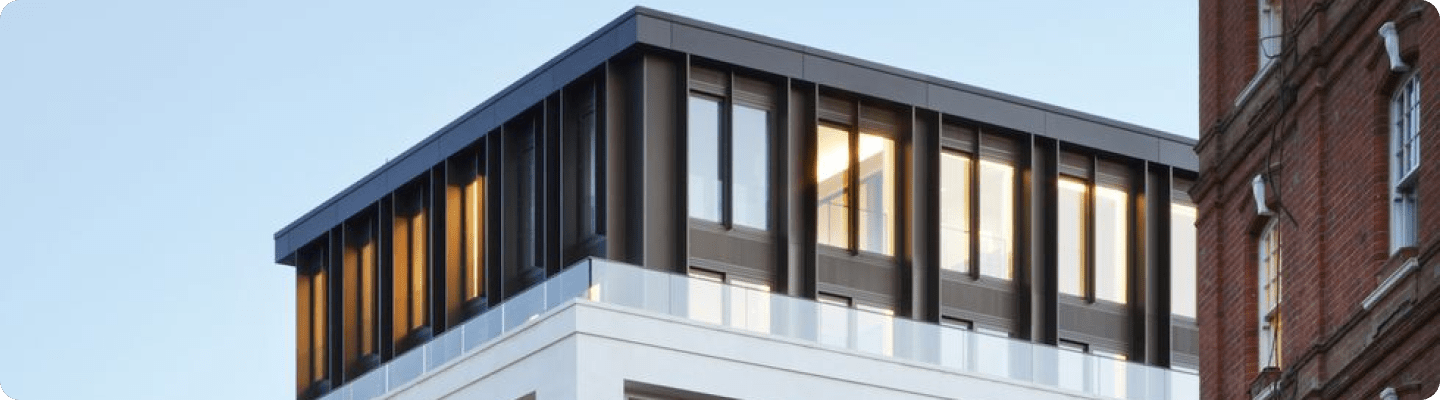

Durability, Low Maintenance & Safety
Energy Efficiency in Multifamily Housing Windows
Soundproofing
Compliance with Local Council Guidelines
Aesthetics
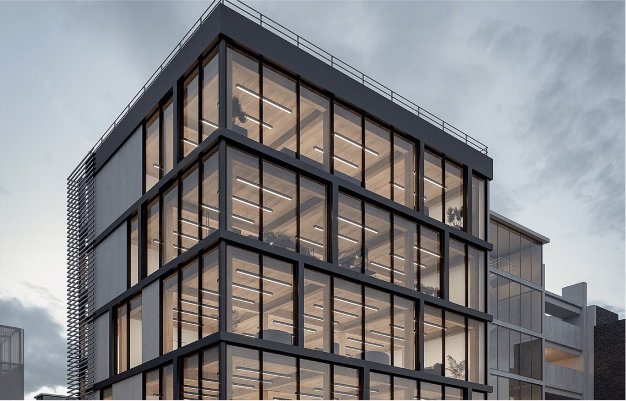
Windows play a pivotal role in urban multifamily housing projects, offering ventilation, natural light, and aesthetic appeal. For architects engaged in such projects, selecting the right windows involves considering key factors. This guide delves into crucial considerations when choosing windows for multifamily housing, offering architects a comprehensive understanding of the decision-making process.
Choosing windows for multifamily housing projects requires a thorough understanding of local guidelines, energy efficiency, soundproofing, durability, safety, aesthetics, and the selection of a reputable window supplier. Architects who prioritize these factors can make informed decisions that contribute to the success of their multifamily housing projects.
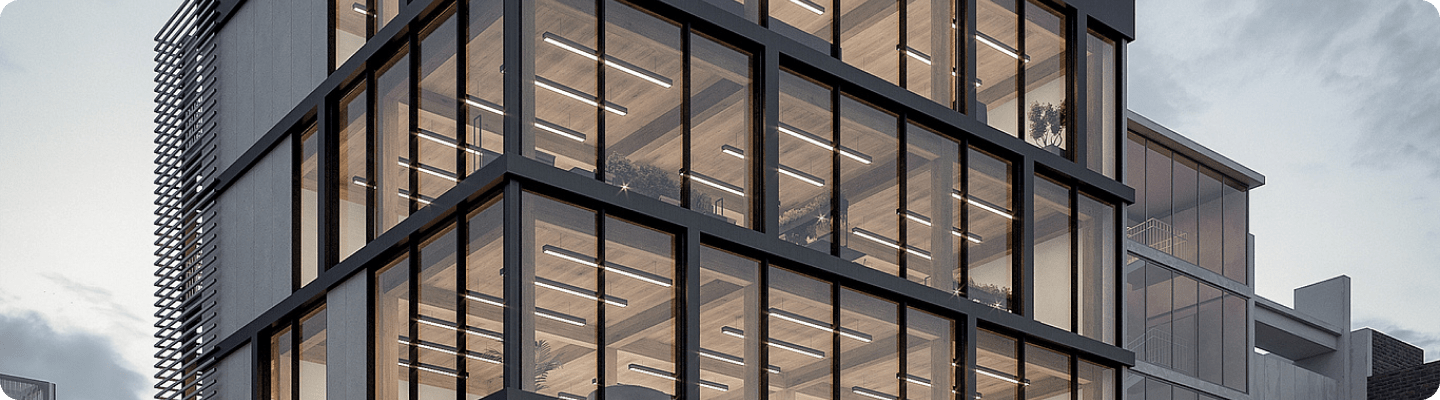

R Class: Light Duty for Residential Buildings
- Ideal for one- and two-family appartments.
- Balances cost-effectiveness with quality and durability.
LC Class: Medium Duty for Low-Rise and Mid-Rise Buildings
- Suited for low-rise and mid-rise multi-family appartments.
- Offers versatility and enhanced performance for residential and light commercial projects.
CW Class: Heavy Duty for Low-Rise and Mid-Rise Buildings
- Designed for buildings with larger sizes, higher loading requirements, and heavy use.
- Robust construction withstands demanding environmental conditions for commercial and multi-family buildings.
AW Class: Severe Duty for Mid-Rise and High-Rise Buildings
- The pinnacle of NAFS performance, ideal for mid-rise and high-rise projects.
- Provides exceptional durability and performance for commercial and high-end residential buildings.
Common Misconceptions:
Building Type Alone Isn't Enough: Consider window size, wind exposure, and budget alongside building type.
Avoid Arbitrary Class Selection: Analyze project needs, location, climate, energy efficiency, and wind load requirements.
Performance Grade Alone Isn't Everything: Justify class choice based on project-specific criteria.
NAFS Classes are for NAFS Products: Apply classes only to NAFS products, not non-NAFS items
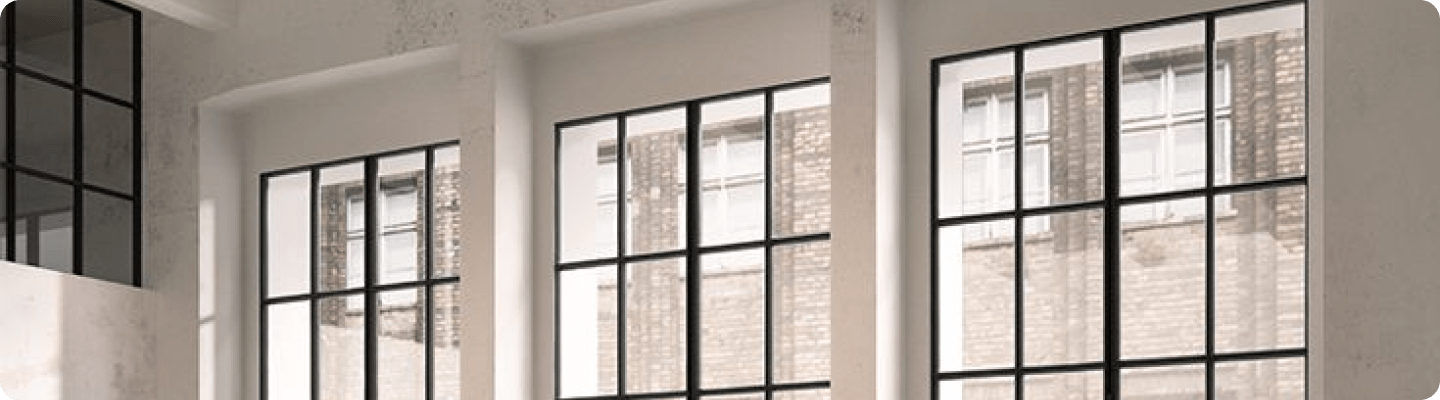
Durability: Resistant to wear and tear, ensuring longevity.
Energy Efficiency: Excellent insulation for reduced heat loss.
Low Maintenance: No need for painting, easy cleaning with soap and water.
Weather Resistance: Withstands rain, wind, and UV rays.